
Beskrivning
Art.nr: RD20041562
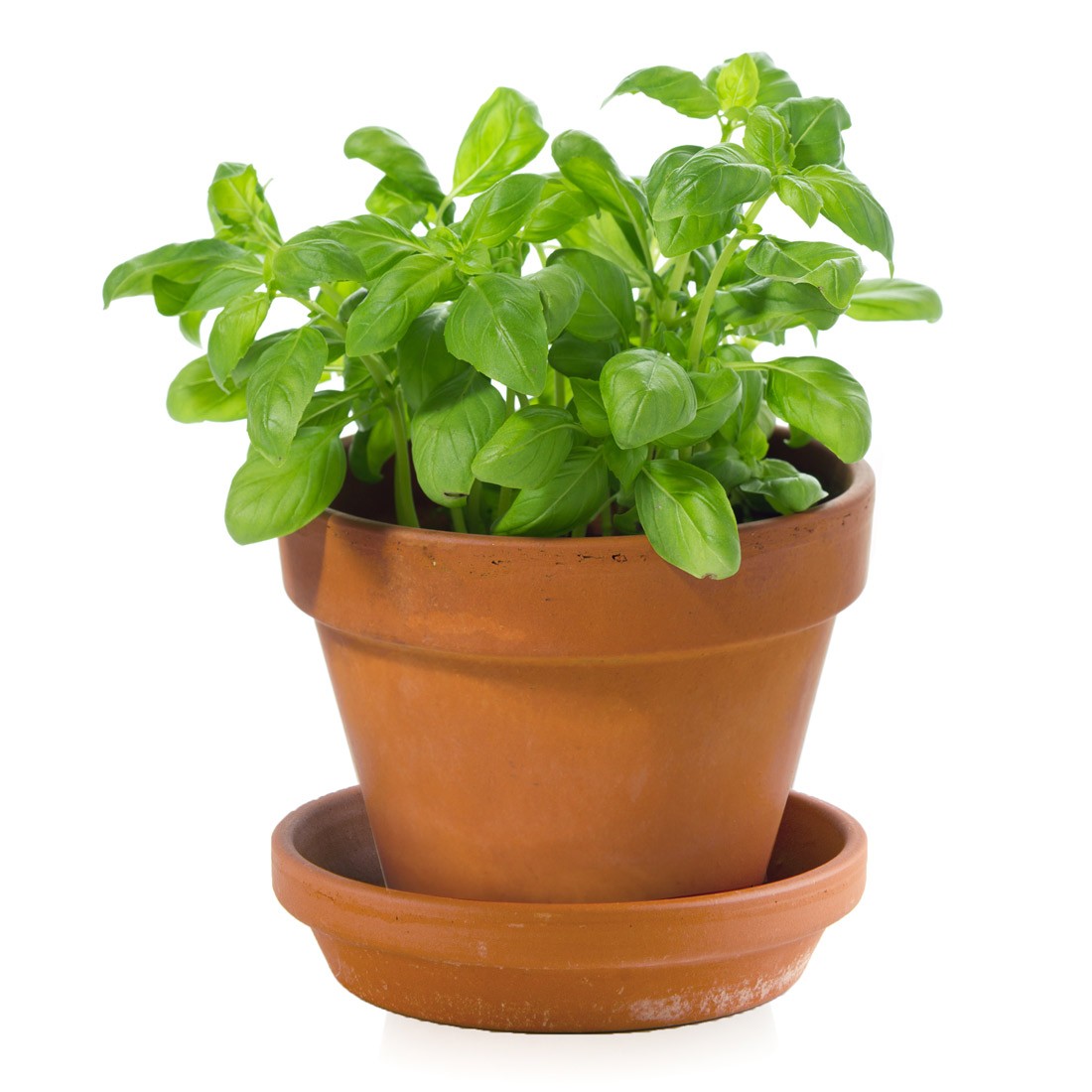
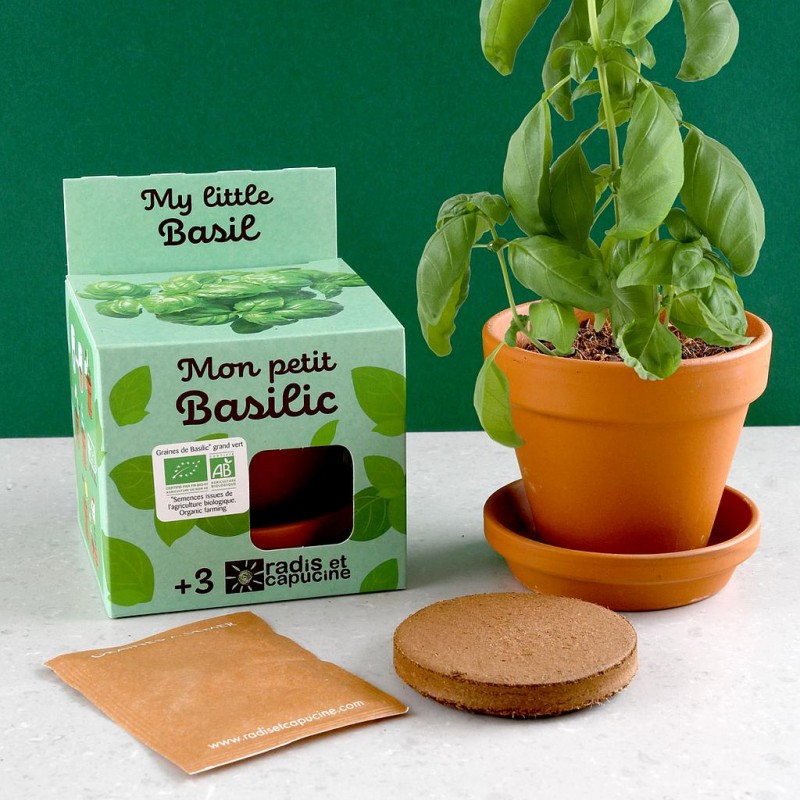
Odla din egen ekologiska basilika i den vackra terracottakrukan.
Innehåll:
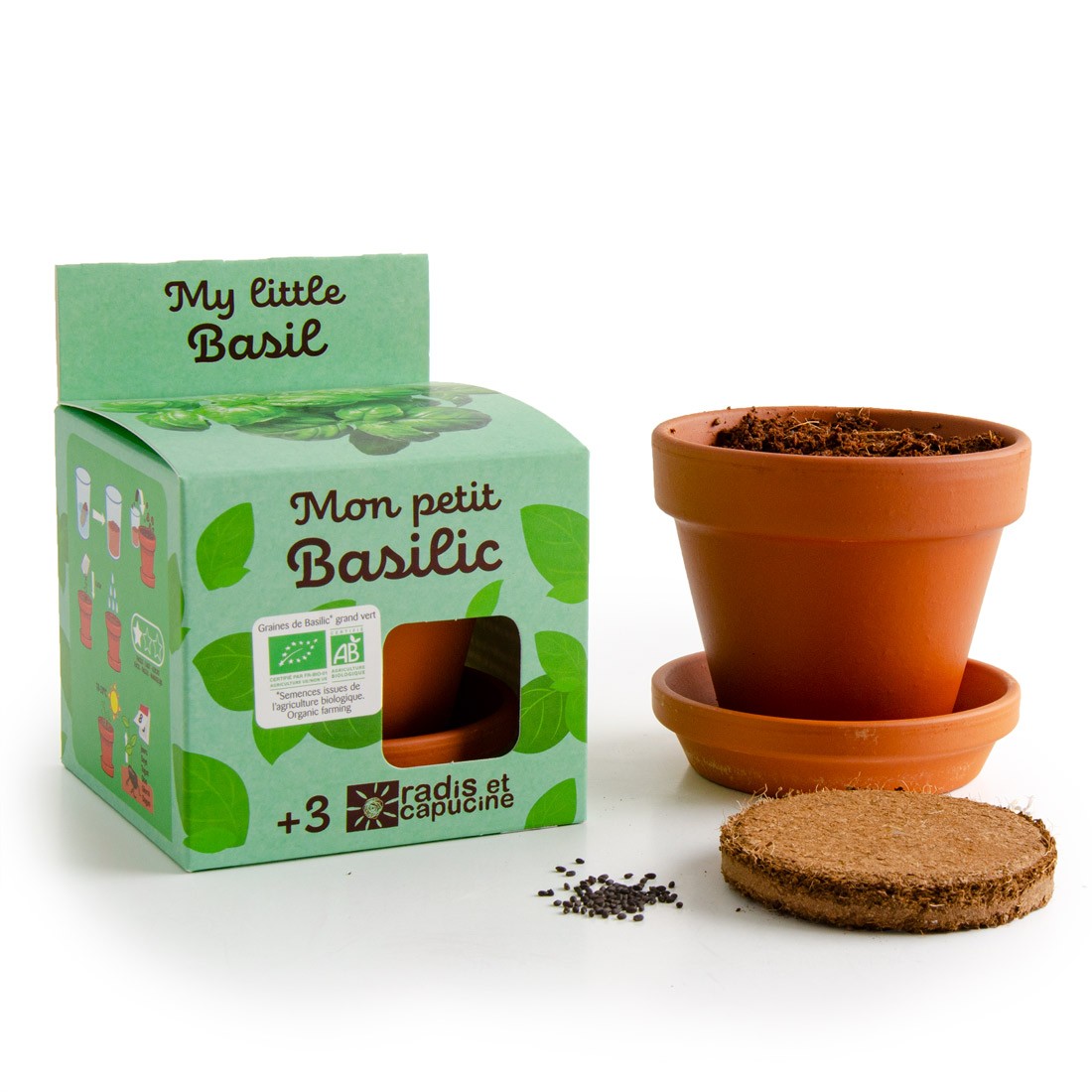
- 1 terracottakruka, 8 cm i diamater, med fat
- 1 påse med ekologiska basilikafrön
- 1 kaka torkad kokosnötjord som blöts upp
- Instruktioner (Obs! Ej på svenska!)
Ytterligare instruktioner (på engelska):
Innehåll:
- 1 terracottakruka, 8 cm i diamater, med fat
- 1 påse med ekologiska basilikafrön
- 1 kaka torkad kokosnötjord som blöts upp
- Instruktioner (Obs! Ej på svenska!)
Radis et Capucine är ett franskt företag som i mer än 25 år har tillverkat organiska fröer och odlingskit för att sprida glädjen med att upptäcka odling och hjälpa människor att se möjligheter och att lära sig mer om sin natur och dess många möjligheter.
Med sina serier för de yngre vill de sprida kunskap om organisk odling och få folk att inse att det inte bara sker i stor skala på landsbygden. Även i ditt lilla rum i en lägenhet i staden så kan man plantera och senare skörda örter, frukter och växter. Förutom att ge ny kunskap är det också stimulerande för ditt barn olika sinnen - smak, lukt och syn.
Att få människor att själva se möjligheter och känna det spännande med att se något gro, växa och "bära frukt" kan inspirera till mycket mer än bara odling. Kanske väcks intresset för en mer hållbar livsstil genom livet, kanske väcks också intresset för att smaka, testa och skapa med grönsaker, frukter och örter genom recept och matlagning?
Radis et Capucine är ett företag med hög kvalité på sina produkter och de säljs på allt från presentbutiker till frö- och blomstermarknader och finns på stora trädgårdscenter i Europa och bl a på Monets trädgårdsbutiker.
Vi på EkoLeko är stolta att distribuera Radis et Capucine i Skandinavien.
Ytterligare instruktioner (på engelska):
-
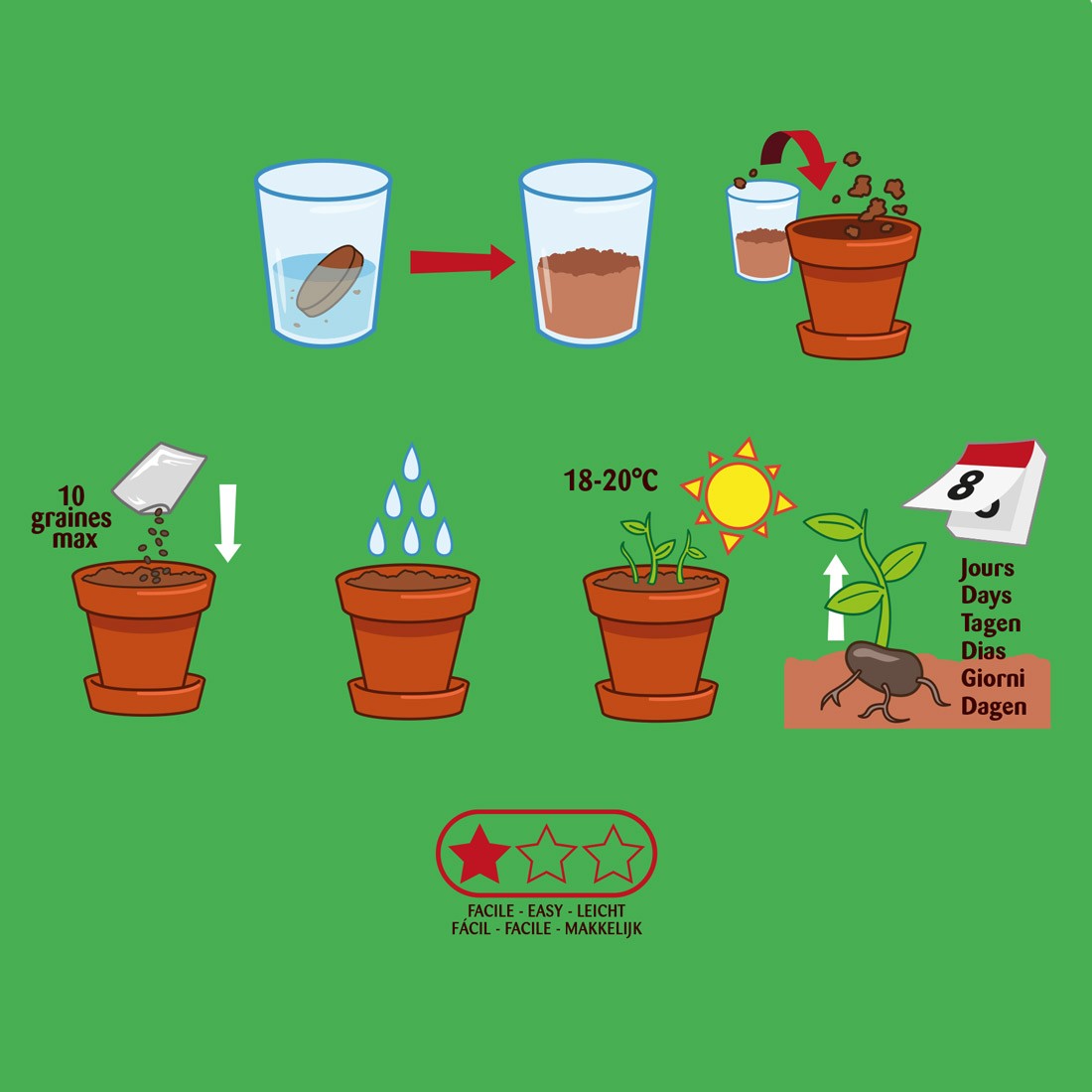
- Fertilized soil: To promote successful germination, start by soaking the fertilized coconut lozenges in 5 to 6 times their volume of water; they will instantly swell. Unlayer them and fill the pot with a spoon. Do not forget to keep a small part to cover the seeds after sowing.
- Sowing: open the bag and pour seeds into your hand. If they are too small, add sand to make it easier to sow. For sowing, sprinkle the seeds on the wet, uncompact coconut soil, a maximum of 2 to 3 seeds per pot. Save the rest of the seeds for later sowing or to sow directly in your garden or on your balcony when the weather is nice. Gently cover the seeds with fertilized coconut soil and tamp lightly.
- Watering: ideally, use rainwater or filtered water (without chlorine). Prefer a fine rain watering, ideally using a hand sprayer, to keep the soil just wet, without gorging it with water, throughout the culture. Think of the Earth as a sponge that is wet and then drained. Do not let the coconut soil dry.
- Germination: expose to sunlight behind a glass, without putting over a heating, to promote rapid and abundant germination. Otherwise, from April on, expose yourself to the sun on your balcony, windowsill, or terrace. Germination takes a few days for the basil, and the plant grows quickly if it does not lack water.
- Transplanting: When the seedlings emerge and reach 5 cm in height, select only one plant per pot and transplant the others into new pots or planters. Be careful to be delicate, not to break the stems or roots when transplanting. Water to promote growth.
- Harvest: Collect the largest leaves 3 months after sowing by pinching the stems without pulling them.
Our tip: Make the tasty pesto with your homemade basil, which will serve as a base for the delicious pistou soup. Here is one of many recipes. A big bunch of basil A ripe tomato 80 g pine nuts Olive oil, salt, pepper 2 cloves of garlic A spoonful of grated parmesan Put everything in a mixer, hop, a few turns of the blade, and it’s ready. At the table!